
Aesthetics Are a Mask: What My Lab Results Taught Me About Sugar Cravings.
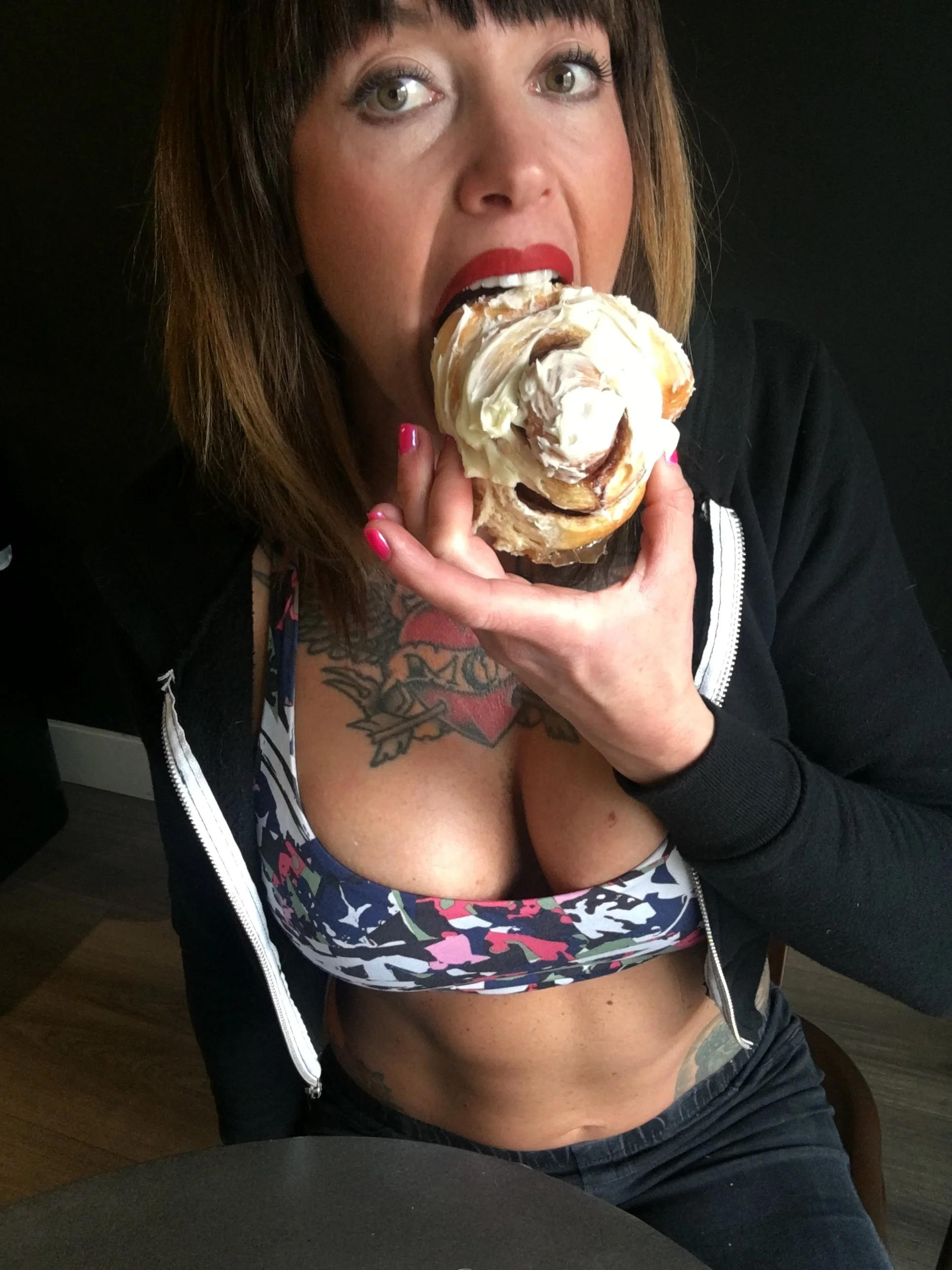
Yes, that’s me eating a cinnamon roll.
Back then, I was competing in CrossFit at an international level, lifting heavy, and running half marathons. I was lean, strong, and loved to move. Because of my metabolic output, I could essentially out-train a bad diet. I know this statement is frowned upon in some circles but let me ask you this: Have you ever trained hard before, bro? I could eat treats whenever I wanted with zero aesthetic repercussions... I still can!
But as a practitioner, I look beyond aesthetics. When I see binary posts labeling sugar as strictly "good" or "bad," I cringe. Physiology is nuanced, and as an educator, I believe it's my responsibility to break down the context and science for people who don't know where to start.
Is sugar inherently evil? No. As @gritandteeth wisely says, "sugar is a health food for someone starving." Biologically, simple carbohydrates are a highly effective mechanism for sports performance. (Though maybe a cinnamon roll isn't the optimal pre-workout fuel... even if mine are unmatched. If you know, you know)
Here’s where my biggest frustration lies: the emerging narrative that eating sugar-laden treats is "self-care" for mental health. If you are struggling with your mental health, reaching for sugar is biochemical self-sabotage. Highly palatable sweets trigger a fleeting dopamine surge, only to leave you stranded in a cortisol-crashing gutter. This crashes your cortisol levels and severely dysregulates your insulin. If you need a mental boost: go for a walk, eat nutrient-dense red meat, try EMDR, journal, or talk it out. Regulate your nervous system; don't spike it.
While pure glucose alone doesn't necessarily destroy the gut, the highly processed fats and refined sugars in pastries degrade the mucosal lining of your intestines. This intestinal permeability contributes to systemic inflammation, autoimmune flares, and neuro-connective issues. Remember, roughly 90% of your body's serotonin and the precursors to dopamine are synthesized in the gut. When you’re in a low mental state, you need to protect your microbiome like your happiness depends on it—because it does.
I'm also not a fan of the "eat clean all week, then gorge yourself on a treat day, or holiday" model. Psychologically, this hardwires a dysfunctional reward system, telling our brains that palatable food is a prize we only get when we've "earned" it. I am however a fan of recovery foods specific to recovery windows but that convorsation is for another day.
Ultimately, sugar cravings aren't a failure of willpower; they are a physiological cry for help. In my practice, there is a literal mathematical equation in lab testing that dictates who will fall victim to chronic cravings. These individuals almost always present with:
• Severe blood sugar/insulin dysregulation
• Under-recovery and systemic exhaustion (low waking cortisol, or stays low though the day)
• Hormonal imbalances (estrogen dominance, low testosterone, low thyroid function)
• Neurotransmitter depletion (low baseline dopamine)
• Gut dysbiosis (bacterial overgrowth, systemic Candida)
• Low Akkermansia muciniphila (a keystone bacteria that acts as our body's natural GLP and metabolic regulator)
I can generally fix sugar cravings by running an advanced GI Map test and balancing the diet according to a thorough clinical intake.
I know this because I lived it. Despite being fairly lean, I struggled with persistent sweet cravings. I wanted to know why, so I ran a GI Map on myself. The results showed zero Akkermansia, low prebiotic levels, and insufficient bile output, along with higher estrogen than progesterone. Clinically, these are internal markers for obesity and metabolic dysfunction. Because I tested instead of guessed, I was able to target the root cause, heal my gut, and fix the cravings for good. Now I know.
